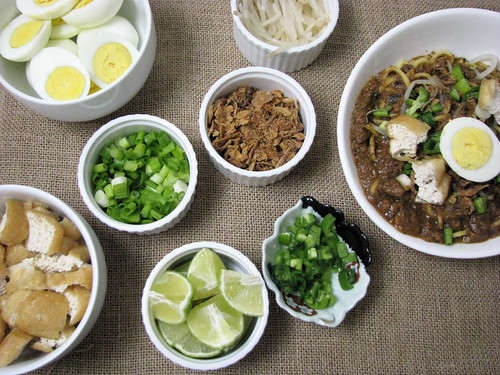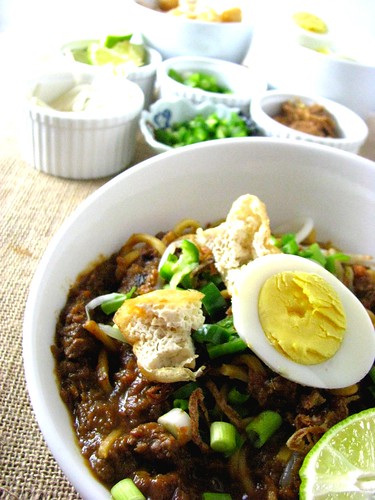
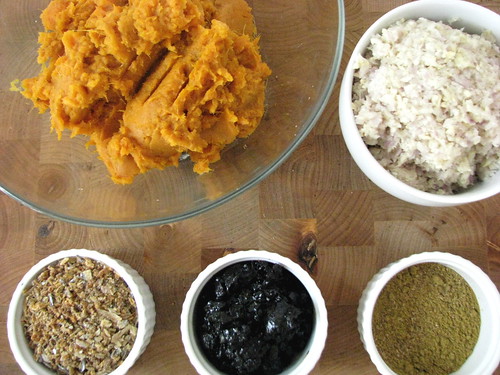
Dish #3 is a Malay noodle bowl I ate often as a kid but until recently, I didn't know what the dense gravy was made of. The words "mee rebus" literally means boiled noodles, which mildly describes the noodles, but says nothing about the distinctive taste of the gravy. If you've never tried it, see if you can imagine its taste: mashed sweet potatoes simmered with fermented black beans, dried shrimps, curry powder and blended aromatics of shallots, garlic, galangal and ginger.
Sounds like a challenge to the taste buds, no? So when our friend L asked me to babysit her sweet daughter A while she ran a quick errand, I decided to ask them (and her husband) to stay for dinner while I experimented with mee rebus. When I have good friends over for dinner and I am trying out a new recipe, I always warn them: we may end up with a pizza.
Thankfully we didn't tonight. My mum-in-law shared with me her recipe because I really like her version. I think what makes the difference is that she uses dried anchovies to make up for using less dried shrimp which results in the gravy tasting less shrimpy but without losing that umami taste. For the noodles, the ones we bought bore the name "pancit" on the packet. If you can't find them, try it with spaghetti - it's similar. Sometimes, home cooks add some fatty beef pieces in the gravy as it cooks to add to the flavor.
Sounds like a challenge to the taste buds, no? So when our friend L asked me to babysit her sweet daughter A while she ran a quick errand, I decided to ask them (and her husband) to stay for dinner while I experimented with mee rebus. When I have good friends over for dinner and I am trying out a new recipe, I always warn them: we may end up with a pizza.
Thankfully we didn't tonight. My mum-in-law shared with me her recipe because I really like her version. I think what makes the difference is that she uses dried anchovies to make up for using less dried shrimp which results in the gravy tasting less shrimpy but without losing that umami taste. For the noodles, the ones we bought bore the name "pancit" on the packet. If you can't find them, try it with spaghetti - it's similar. Sometimes, home cooks add some fatty beef pieces in the gravy as it cooks to add to the flavor.
Mee rebus
1 ½ lb fresh yellow egg noodles
2 cups bean sprouts, blanched
18 oz sweet potato
6 tablespoons fermented black beans
4 tablespoons dried anchovies, cleaned
3 tablespoons dried shrimps
4 tablespoons coriander powder
1 tablespoon cumin powder
½ cup tamarind juice
(from 1 tablespoon of tamarind paste)
2 tablespoons sugar
1 teaspoon salt
3 cups water
5 tablespoons oil
spice paste:
20 shallots
5 garlic cloves
2 inch galangal
1 inch ginger
8 candlenuts
garnish:
4 boiled eggs, cut into halves
3 tablespoons fried shallots
3 tablespoons spring onions, sliced
1 cup fried or firm tofu, cut to 2 by 1 inch pieces
2 limes, cut into wedges
3 green serrano chiles, de-seeded and sliced.
1. Peel and cut the sweet potatoes into chunks. Boil until soft, drain and mash.
2. While the sweet potatoes are boiling, peel the shallots, garlic, galangal and ginger. Grind them with the candlenuts with a blender or food processor until fine.
3. Pound the dried anchovies and dried shrimps with mortar and pestle (or use a blender/food processor too). Add a couple of tablespoon of water if the mixture is too dry to grind.
4. Heat oil in a pot to medium high. Saute the spice paste for about 3-4 minutes until the shallots are caramelized. Add the coriander and cumin powder, fermented black beans and the dried anchovy/dried shrimp mixture. Fry for about 1 minute and then put in the mashed sweet potatoes. Blend well. You will get a very thick mixture. Slowly add the water, stirring as you pour it in. Bring to a boil. Add the sugar, salt and tamarind juice. Simmer until fragrant, about 40-50 minutes. If the gravy is too thick, stir in water as necessary.
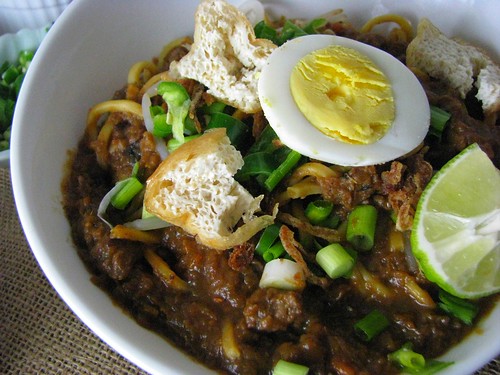
5. To serve, pour gravy over some noodles and bean sprouts in a bowl. Garnish with half of an egg, tofu, green onions, fried shallots and serrano chilies.
2. While the sweet potatoes are boiling, peel the shallots, garlic, galangal and ginger. Grind them with the candlenuts with a blender or food processor until fine.
3. Pound the dried anchovies and dried shrimps with mortar and pestle (or use a blender/food processor too). Add a couple of tablespoon of water if the mixture is too dry to grind.
4. Heat oil in a pot to medium high. Saute the spice paste for about 3-4 minutes until the shallots are caramelized. Add the coriander and cumin powder, fermented black beans and the dried anchovy/dried shrimp mixture. Fry for about 1 minute and then put in the mashed sweet potatoes. Blend well. You will get a very thick mixture. Slowly add the water, stirring as you pour it in. Bring to a boil. Add the sugar, salt and tamarind juice. Simmer until fragrant, about 40-50 minutes. If the gravy is too thick, stir in water as necessary.
5. To serve, pour gravy over some noodles and bean sprouts in a bowl. Garnish with half of an egg, tofu, green onions, fried shallots and serrano chilies.
Serves 6, with possible surplus for 2nd helpings!