Showing posts with label everyday singaporean. Show all posts

Saturday, August 15, 2009

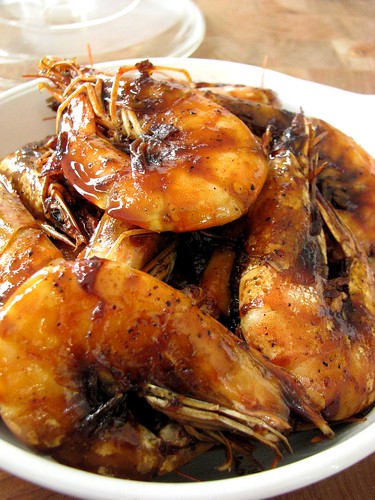
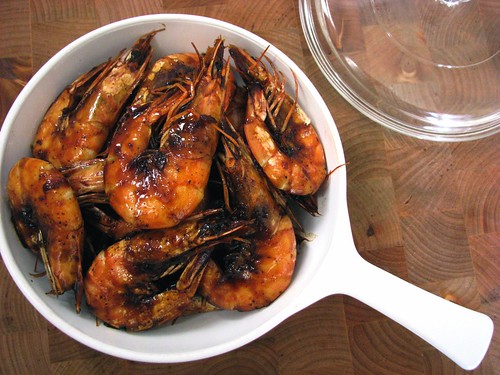
Sweet soy sauce prawns

sweet soy sauce and black pepper prawns recipe

Our city hike today was fun and I learned more about San Francisco. But more on that tomorrow. Now, I'd like to complete my patriotic duty - Dish #7! It's a simple dish with 5 ingredients - prawns, soy sauce, brown sugar, garlic and black pepper that my husband cooked for dinner tonight. I just took pictures and ate! He says his mom cooks something similar and he was just guessing the dish. He usually just "agak-agak" (estimates) the proportion, but this time, I asked him to note them down so I could write them here. Keep the shells and heads on so that the prawns stay moist.

Sweet soy sauce prawns

1 lb prawns
3 tablespoon soy sauce
3 tablesoon brown sugar
3 cloves garlic, minced
½ tablespoon black pepper
1 tablespoon oil for frying

1. Mix the soy sauce, brown sugar, garlic and pepper in a bowl. Marinate the prawns with the mixture. Cover and refrigerate for 2-4 hours.

2. Heat oil in a pan or wok to medium hot. Put the prawn mixture in and cook until the prawns turn pink. If you'd like a little sauce in the dish, just add a tablespoon of water while cooking.

sweet soy sauce and black pepper prawns recipe

Friday, August 14, 2009

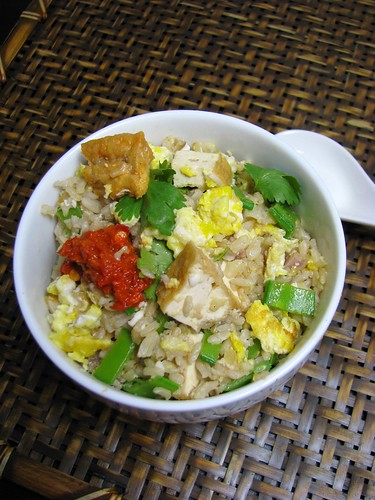
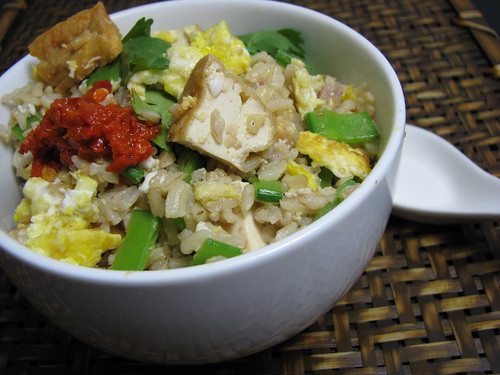
Salted fish fried rice with brown rice

salted fish fried brown rice recipe

My mum told me that salted fish used to be a poor man's food. Fish preserved with salt was food that families could keep for a long time without refrigeration. As a kid, she ate salted fish that had been fried, with plain rice, and a sprinkle of sweet soy sauce, for a meal. Then she had her own family. She would cook chicken, or beef and vegetables for us, but sometimes, she would have a little fried salted fish on the side. She and my dad would eat that with other dishes. I was always invited to try, but I would just wrinkle my nose and shake my head. To me, salted fish was not a poor man's food but rather, it was old people's food. Of course, my parents were barely in their forties at that time.

I have finally acquired the taste for salted fish. I suppose it means I am in the "old people" category now. My preferred way of eating the salted fish is in fried rice. In this recipe for Dish #6, I use brown basmati rice because we are eating more of that at home. This dish is usually cooked with chicken pieces - I substituted that with tofu to cut the saltiness. I also added vegetable broth because I like my fried rice moist. I served the fried rice with my mum's sambal belacan but you can use any chili or sambal you have e.g. Sriracha or sambal oelek.

salted fish fried brown rice recipe

Salted fish fried rice with brown rice

3 cups of day old brown rice
2 oz salted fish, cut into ½ inch cubes
2 oz snow peas, sliced ½ inch
6 oz baked tofu or any dense tofu, cut into 1-inch cubes
2 eggs
4 garlic cloves, minced
1-inch ginger, minced
a few sprigs of cilantro
1 tablespoon fish sauce (or soy sauce)
1 teaspoon white pepper
3 tablespoons vegetable stock
3 tablespoons oil
a few drops of sesame oil

1. Heat 1 tablespoon oil in a wok to medium heat and fry the eggs (scrambled). Remove eggs and heat 2 tablespoon of oil.

2. Fry the garlic, keeping heat at medium or slightly lower so that the garlic does not burn. Add the ginger and continue frying until fragrant or about 1 minute. Put in the salted fish, tofu and snow peas. Fry for about 2 minutes.

3. Add the rice and fried eggs, mixing all the ingredients together. Pour in the fish sauce and vegetable broth. Stir well. Then sprinkle in the white pepper followed by the sesame oil. Stir again.

4. To serve, scoop the rice into two bowls and put a few cilantro leaves on each bowl. Sambal is optional.

Serves 2

Thursday, August 13, 2009

Chinese rojak

Chinese rojak recipe

The heat has been getting to me. I know it's summer and I don't want to complain. Afterall, I was born and I grew up in a country that is just 1ยบ north of the equator. But Dexter and I were both pretty listless today. The last thing I wanted to do was spend a lot of time cooking in the kitchen. So I rummaged the fridge to see what I could rustle up for dinner.

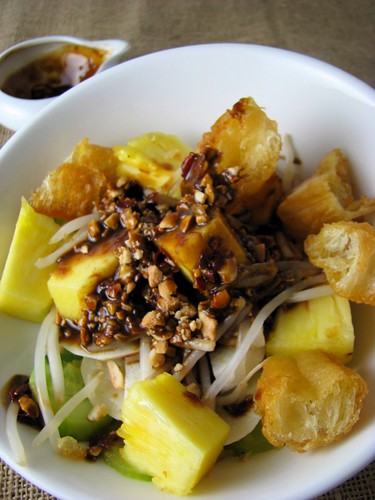
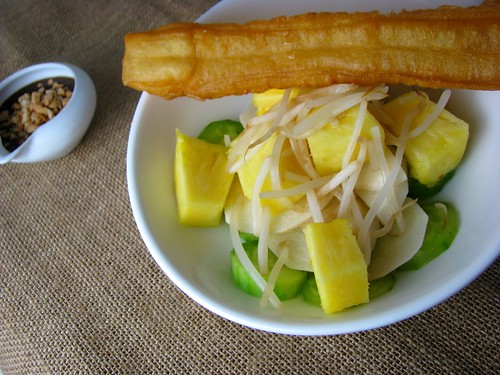
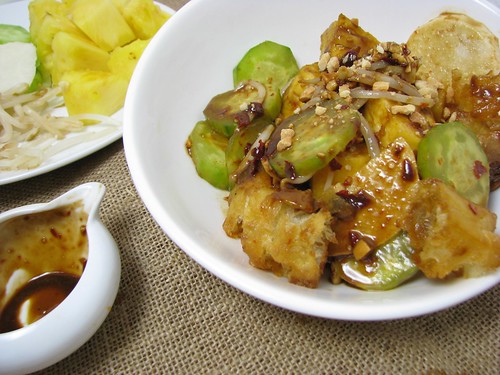
I saw that we had the remaining petis we used for the tau pok on Sunday. There was also some bean sprouts and cucumber left. With the whole pineapple we have, Chinese rojak seems like obvious. It also means I have Dish #5 Chinese rojak is like a Chinese salad - raw vegetables and fruit with the petis dressing. I asked my husband to pick up a jicama on his way home and we have a dinner which requires no cooking. Of course when he came home, he brought some yu tiao too. It is also called Chinese donut - strips sweet fried dough that you can get at the deli section of a Chinese supermarket, or you can make it yourself - here is a recipe to try. But you can leave it out if you can't find it.

Like most salads, this Chinese rojak recipe is flexible. You could add more pineapple, less bean sprouts - really whatever you prefer. We also tweaked the rojak sauce to make it thicker.

Chinese rojak recipe

Chinese rojak recipe

Chinese rojak


16 2-inch pineapple pieces
½ medium sized jicama, peeled and sliced
½ cup bean sprouts, blanched
1 small cucumber, peeled and sliced
2 small yu tiao

Rojak sauce
3 tablespoons petis (hae ko)
3 tablespoons water
1 tablespoon water.
1 red chili, blended/pounded, or 1 teaspoon sambal oelek
juice of ½ a lime
3 tablespoons crushed peanuts

Blend the ingredients of the sauce, sprinkling the peanuts as the last step. Mix the ingredients together and divide onto 2 plates. Pour the sauce equally on each plate. Toss and enjoy!

Serves 2

Wednesday, August 12, 2009

Pomfret in black bean sauce

fermented black bean pomfret recipe

A couple months ago, I went to the 2 supermarkets I go to most frequently - Whole Foods and Ranch 99 - armed with a notepad and a pen. I wrote down the names of almost all the fishes. Yes, I looked silly but there is a method to the madness. When I got home, I made two lists out of the names. In the first list, I looked up the alternative names for the fishes. Many of the fishes look familiar, but I probably know them by a different name. For instance, I thought I only knew canned sardines and was excited to find fresh sardines at Whole Foods. I wondered what fresh sardines tasted like. To my surprise, after I cooked and ate them, I realized that my mum actually cooked them often in Singapore, only they are called "ikan tamban". It occurred to me there might be more fishes hiding behind other names. Sometimes, when I look at the array of fishes available, I'm not sure I'd know how to cook them, but now I feel less intimidated when I know I've eaten them before.

My second list was to write the mercury level of each fish so I can make an informed decision when I buy fish. I have become more aware of the high mercury level of the some of the fishes I used to eat a lot of - for instance king mackerel. I want to make sure we are not ingesting an alarming level of mercury. So now I go grocery shopping with these two lists in my pocket.

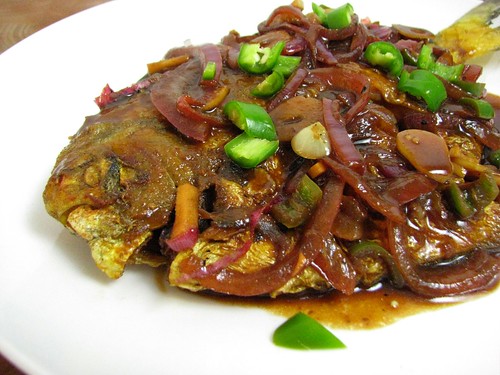
My research for the second list showed that pomfret is low in mercury. This is good news because we ate this fish (ikan bawal) often at home. My mum would make sambal pomfret, curry pomfret, kicap (sweet black soy sauce) pomfret, assam pedas (spicy tamarind sauce) pomfret.... well, you get the idea. I decided to make ikan masak taucu (fish with black bean sauce) which my mum used to cook with ikan kembung (Indian mackerel). It has an intriguing taste - the combination of fermented black beans, tamarind juice and onions produces a tangy sauce.

I used white pomfret - you can use any type. When I fry fish, I always use a wok because the smaller base means I can use less oil. It is also easier to turn the fish over. When I used to help my mum in the kitchen, she told me that she rubs turmeric on the fish to get rid of any fishy smell or taste that the fish might have. Sometimes she also seasons the fish with salt, but I did not do so here because I was using fermented black beans which is already salty.

fermented black bean pomfret recipe

fermented black bean pomfret recipe

Pomfret in black bean sauce
(Ikan masak taucu)

1 medium size pomfret, cleaned and halved
1 teaspoon turmeric powder
¼ onion, sliced
2 garlic cloves, sliced
½ inch ginger, minced
2 tablespoons fermented black bean
1 cup tamarind juice (from 2 tablespoons of tamarind paste)
2 green serrano chilies
1 teaspoon sugar
oil for frying

1. Rub the fish with turmeric. Heat about ½ inch oil in a wok to medium heat. Fry each half of the fish separately until golden brown, about 3-4 minutes on each side.

2. Drain the oil, leaving about 2 tablespoons of oil in the wok. Lowering the heat to medium, put in the onions and fry for 2 minutes. Add garlic and ginger, stirring for 1 minute. Add the fermented black bean, stirring for another minute. Then pour in the tamarind juice. Bring up the mixture to a boil, then lower to a simmer. Add the sugar. Let the sauce reduce for about 5 minutes.

3. Pour the hot sauce over the pomfret and garnish with serrano chilies.

Serve with rice and a vegetable dish. I recommend this sambal belacan kangkong.

Tuesday, August 11, 2009

Mee rebus - yellow noodles in sweet potato gravy

resipi mee rebus recipe

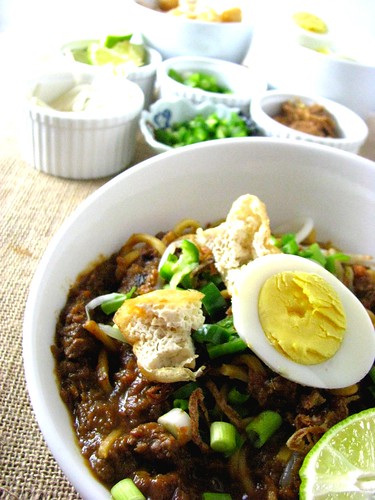
Dish #3 is a Malay noodle bowl I ate often as a kid but until recently, I didn't know what the dense gravy was made of. The words "mee rebus" literally means boiled noodles, which mildly describes the noodles, but says nothing about the distinctive taste of the gravy. If you've never tried it, see if you can imagine its taste: mashed sweet potatoes simmered with fermented black beans, dried shrimps, curry powder and blended aromatics of shallots, garlic, galangal and ginger.

Sounds like a challenge to the taste buds, no? So when our friend L asked me to babysit her sweet daughter A while she ran a quick errand, I decided to ask them (and her husband) to stay for dinner while I experimented with mee rebus. When I have good friends over for dinner and I am trying out a new recipe, I always warn them: we may end up with a pizza.

Thankfully we didn't tonight. My mum-in-law shared with me her recipe because I really like her version. I think what makes the difference is that she uses dried anchovies to make up for using less dried shrimp which results in the gravy tasting less shrimpy but without losing that umami taste. For the noodles, the ones we bought bore the name "pancit" on the packet. If you can't find them, try it with spaghetti - it's similar. Sometimes, home cooks add some fatty beef pieces in the gravy as it cooks to add to the flavor.
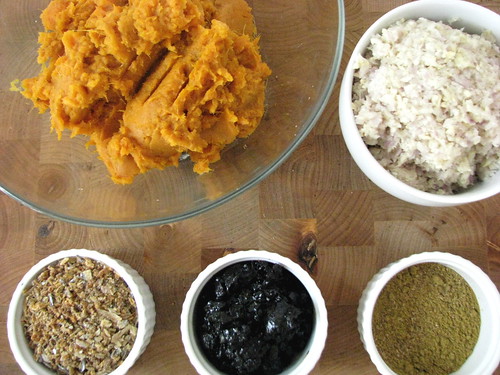
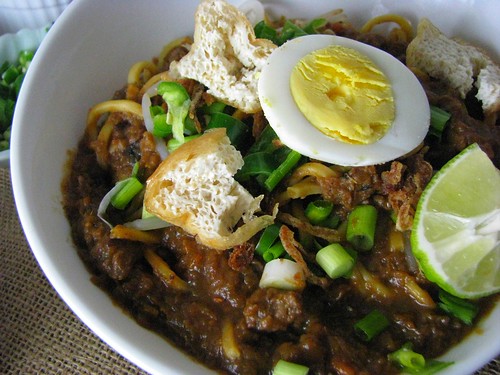
resipi mee rebus recipe

resipi mee rebus recipe


Mee rebus

1 ½ lb fresh yellow egg noodles
2 cups bean sprouts, blanched
18 oz sweet potato
6 tablespoons fermented black beans
4 tablespoons dried anchovies, cleaned
3 tablespoons dried shrimps
4 tablespoons coriander powder
1 tablespoon cumin powder
½ cup tamarind juice
(from 1 tablespoon of tamarind paste)
2 tablespoons sugar
1 teaspoon salt
3 cups water
5 tablespoons oil

spice paste:
20 shallots
5 garlic cloves
2 inch galangal
1 inch ginger
8 candlenuts

garnish:
4 boiled eggs, cut into halves
3 tablespoons fried shallots
3 tablespoons spring onions, sliced
1 cup fried or firm tofu, cut to 2 by 1 inch pieces
2 limes, cut into wedges
3 green serrano chiles, de-seeded and sliced.

1. Peel and cut the sweet potatoes into chunks. Boil until soft, drain and mash.

2. While the sweet potatoes are boiling, peel the shallots, garlic, galangal and ginger. Grind them with the candlenuts with a blender or food processor until fine.

3. Pound the dried anchovies and dried shrimps with mortar and pestle (or use a blender/food processor too). Add a couple of tablespoon of water if the mixture is too dry to grind.

4. Heat oil in a pot to medium high. Saute the spice paste for about 3-4 minutes until the shallots are caramelized. Add the coriander and cumin powder, fermented black beans and the dried anchovy/dried shrimp mixture. Fry for about 1 minute and then put in the mashed sweet potatoes. Blend well. You will get a very thick mixture. Slowly add the water, stirring as you pour it in. Bring to a boil. Add the sugar, salt and tamarind juice. Simmer until fragrant, about 40-50 minutes. If the gravy is too thick, stir in water as necessary.

5. To serve, pour gravy over some noodles and bean sprouts in a bowl. Garnish with half of an egg, tofu, green onions, fried shallots and serrano chilies.

Serves 6, with possible surplus for 2nd helpings!
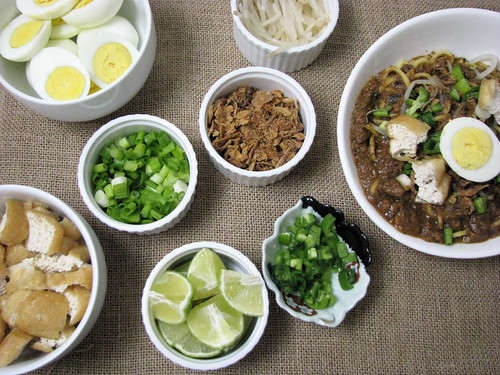
resipi mee rebus recipe

Monday, August 10, 2009

The Sambal Series - Sambal belacan kangkong

sambal belacan kangkong recipe

Kangkong is one of those vegetables which I've always known by its Malay name. I think in school we learned that its anglicized name is water convolvulus - not a name that rolls off the tongue easily (try saying it several times). Perhaps it doesn't like to be called that either because it's also known as water morning glory and water spinach. But no need to look for it in California by any of those monikers. If you go to the Chinese supermarket, it's labeled "on choy". It has more aliases than a secret agent. In fact, in might be one. According to this wiki, it is technically illegal to grow, possess or move kangkong (even interstate), but because it goes by so many names, it slips pass customs easily.

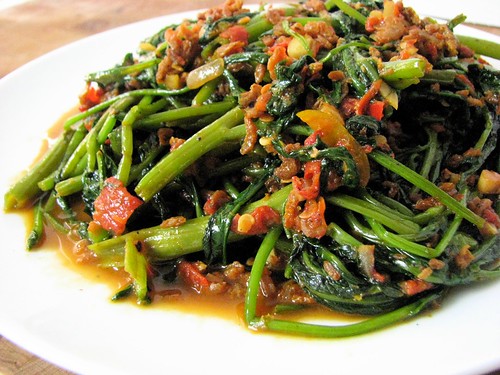
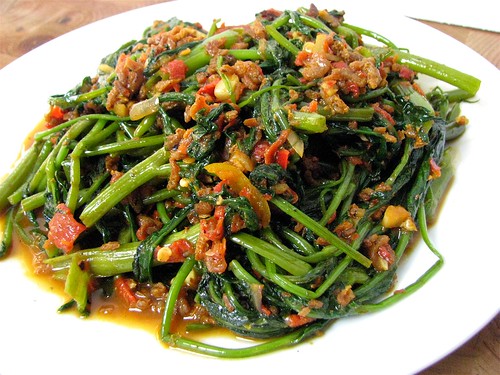
I am of course delighted that I can enjoy this leafy green here. And my favorite way to eat it is to cook it with sambal belacan (and ideally with savored sambal stingray). So I present sambal belacan kangkong as dish #2. Despite its frail appearance, the kangkong holds its own against the pungent sambal belacan.

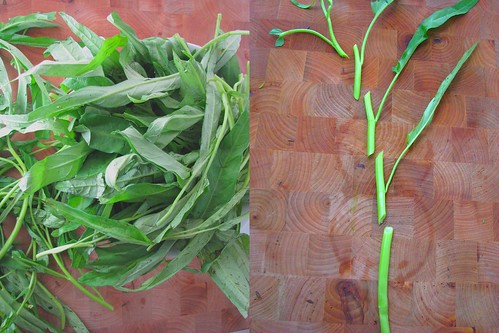
This might seem strange but I added a picture below of how the kangkong is to be cut. The leaves shouldn't be stripped at the base of their stalks. Part of the stem should be included so that you get some crunch as well. I used the sambal belacan sent to me by mum, but I've provided a recipe for it below. Red serrano chiles are a little elusive where I am. If it's the same for you, use any red chilies like fresno or holland chilies. Neither are as hot as serrano and the sambal belacan will not taste exactly the same, but they make decent substitutes. It is also best to use kalamansi lime if you are able to get some; otherwise you can use reguar lime. Dried shrimps come in different sizes, but it does not matter which one you choose because they are to be chopped into small pieces.

sambal belacan kangkong recipe

sambal belacan kangkong recipe

Sambal belacan kangkong

1 lb kangkong
1 oz dried shrimps, chopped
2 shallots, minced
3 cloves garlic, minced
3 tablespoons of sambal belacan
3 tablespoons of water
2 tablespoons oil

Sambal belacan
5-6 fresh red serrano chilies, sliced and do not de-seed completely
2-inch piece of belacan, toasted until fragrant
4 teaspoons of lime juice
peel of ½ a lime, sliced thinly

1. Pound all the ingredients of the sambal belacan but not too finely.

2. Put 2 tablespoons of oil in a wok over medium high heat. Fry the shallots until they are caramelized - about 3-4 minutes. Add the dried shrimps and the garlic. Stir-fry for 1 minute then add the sambal belacan and continue frying for 1 minute. Put in the kangkong. Mix it well with the rempah or spice paste already in the wok. Add the water. Cook until the kangkong leaves are wilted.

Serve with rice.

When sambal belacan means she loves me

sambalbelacan1

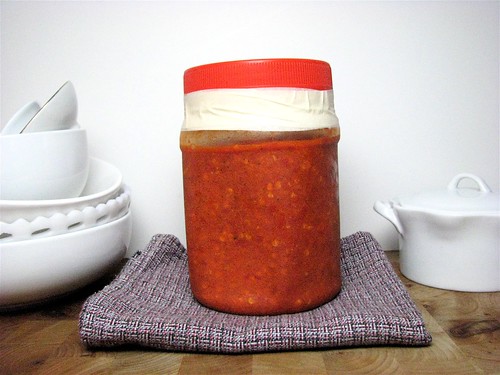
See that container with the masking tape wrapped around its cover? It's chockfull of sambal belacan my mum made from one kilo of fresh red serrano chilies and flown more than 8000 miles in the good hands of our friend R. I redistributed it into smaller containers - one goes into the fridge and the rest go into the freezer for future use. I think I know what's for dinner tonight.

sambalbelacan2

Sunday, August 9, 2009

Tau pok - Stuffed fried tofu with rojak sauce

fried tofu tau pok recipe

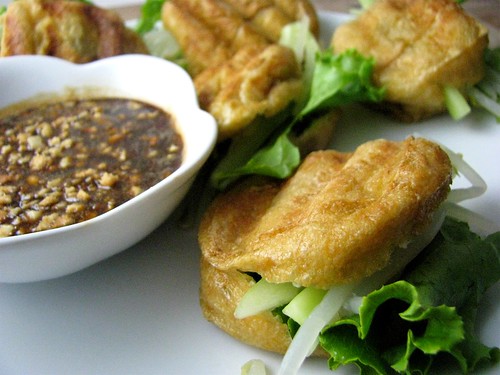
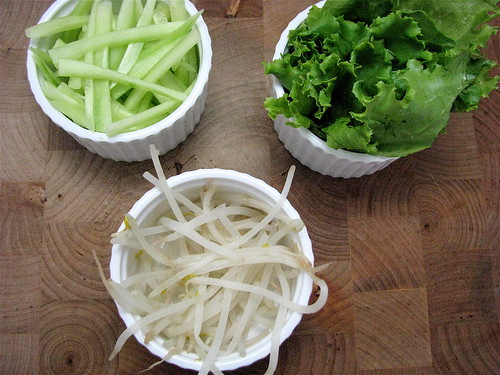
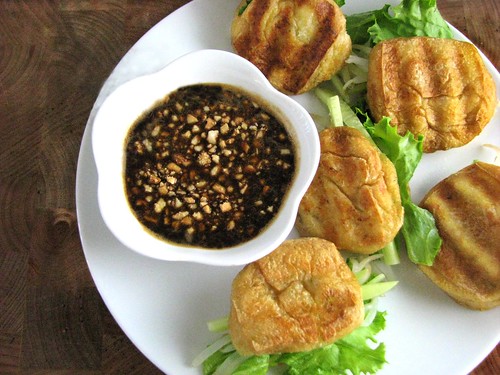
I chose tau pok as the first of my everyday singaporean dish because it's one of my hawker center favorites. It is fried tofu stuffed with green leaf lettuce, bean sprouts and thin slices of cucumber, and then grilled. What makes the dish is the sauce - it's like a savory version of molasses. To eat it, you can sprinkle the sauce over the tofu or you can choose to dip it in the sauce. Either way, this simple dish entrances the taste buds. You have the crispiness of the tofu and the cool crunch of the cucumbers mingling with the funky taste of the shrimp paste which makes the sauce. It's a great side dish or a snack in the afternoon.

The version of shrimp paste used is called petis udang in Malay or hae ko in Hokkien. You can get it in Asian supermarkets. The ingredients - fresh prawn extract, sugar, flour and salt. It is a very thick paste and usually needs to be thinned, in this case with tamarind juice. The petis udang can vary among brands, so you should taste it as you mix the ingredients. Grilling is preferred but you can also cook it over the stove on a grill pan like I did. I chose not to stuff the tofu before grilling like the hawkers do it because I don't have the dexterity to prevent the filling from spilling out. I also used an English cucumber. Since it has to be sliced thinly, it's best that the seeds are as small as possible.

fried tofu tau pok recipe

fried tofu tau pok recipe

Tau pok with rojak sauce

10 medium sized fried tofu
½ cup bean sprouts, blanched
½ cup English cucumber, thinly sliced
3 green lettuce leaves

Rojak sauce
3 tablespoons petis udang (hae ko)
3 tablespoons powdered sugar
3 dried chilies, de-seeded and blended/pounded or 1 tablespoon of sambal oelek
¾ cup tamarind juice
juice of 1 lime
3 tablespoon roasted peanut, roughly crushed

1. Place the tofu on paper towels and let them dry as much as possible. Put the tofu on a dry grill pan over medium high heat. Press down the tofu with a grill press or, if like me, you don't have one, use a glass container over a paper towel. Turn over after 3-4 minutes, or until golden brown. Let the tofu cool a little, then use a paring knife to slit three sides of the tofu.

2. Tear the green leaf lettuce into smaller pieces, put it in a tofu with together with a few bean sprouts and slices of cucumber. Repeat with all the tofu.

3. To make the sauce, combine all the sauce ingredients together, except the peanuts, until the sugar is well incorporated. You can heat the sauce to make sure the sugar is dissolved. Taste - see if you need to add additional sugar or lime juice. Add the peanuts just before serving.

Happy 44th Birthday, Singapore!

merlion1

Back in Singapore, my National Day celebrations were limited to turning the TV channel to the grand annual parade while having dinner. But here, we have two National Day parties this weekend to celebrate. Maybe absence makes the heart grow fonder? So in honour of this big day, I will cook and post a dish from Singapore, or one that I associate with Singapore, everyday for one week. As a Singaporean, there is no better way to show patriotism than good "makan" (Malay for "eat")!